By Father Frank J. Alagna, Ph.D.
Congregation Emanuel of the Hudson Valley, Kingston, Nov. 14, 2023
Last Saturday a convicted rapist, a soon-to-be-convicted fraudulent thief, a consummate grifter, an inveterate liar, and a traitor to democracy, complicit in the deaths resulting from the January 6th insurrection, unleashed a hateful cacophony targeting some of the most vulnerable among us — undocumented immigrants, asylum seekers, and even documented immigrants. His disturbing wish list includes sweeping raids, sprawling detention camps, mass deportations, and a resumption of the crime of separating children from their parents as a deterrent.
What’s even more distressing than the rant itself is the substantial number of adoring fans rallying behind this narcissistic sociopath. The existence of such vicious, xenophobic, racist, and fascist ideologies among a significant portion of the population is a pervasive evil that we will continue to face as we move forward. It is not going away. And so, we must, without ceasing, pray in earnest:
Almighty God, who created us in your own image: Grant us grace fearlessly to contend against evil and to make no peace with oppression; and, that we may reverently use our freedom, help us to employ it in the maintenance of justice in our communities and among the nations, to the glory of your holy Name.
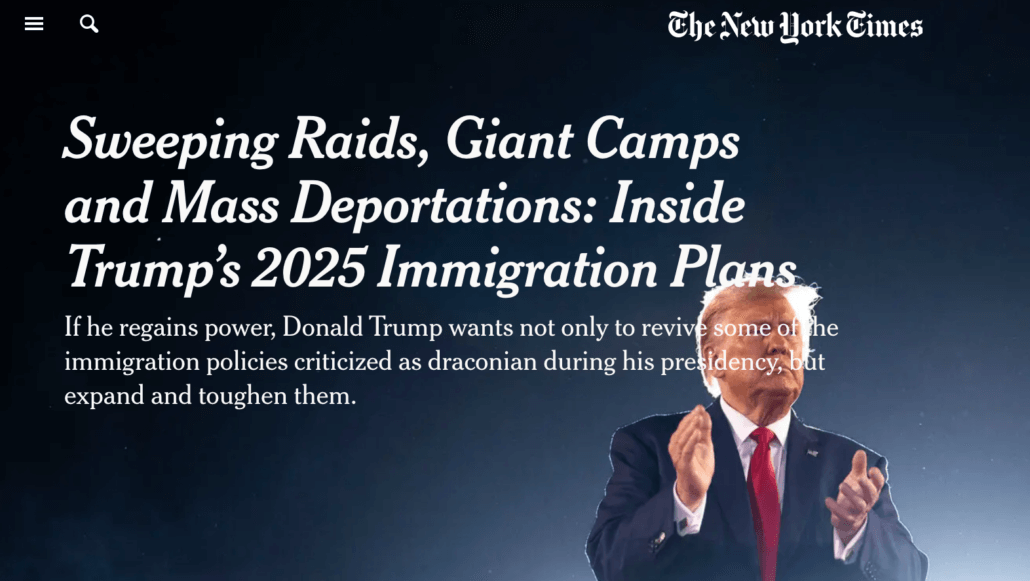
Click photo to read this Nov. 11, 2023 article by Charlie Savage, Maggie Haberman, and Jonathan Swan.
“Historic.” “Unprecedented!” These are the words some use to describe today’s bigger-than-ever flood of global refugees and migrants. But the story of migration is as old as humanity itself. Is not migration a recurring theme in the faith stories of Muslims, Jews, and Christians? Muhammad, was a refugee, having fled Mecca with his followers in 622 to escape persecution, and as a refugee was cared for by host communities. Abraham and his family were forced to migrate from Ur, and they journeyed in uncertainty and wonder to a yet unidentified place that the Lord would show them. The Exodus is an epic story of migration. God’s chosen people, whether to or from their exile or captivity lived the harshness of migration. Even Jesus, as an infant, fled from Nazareth to Egypt to escape Herod’s murderous threats.
Welcome the stranger
To authentically connect with our shared faith tradition is to face the crucible of migration and the imperative repeatedly communicated in our sacred texts: to welcome the stranger and care with compassion for the foreigner seeking safe harbor among us. There is no ambiguity. Believers uninfected with the dark forces of narcissistic self-interest, tribal and national exceptionalism, and a manipulated fear of the other, do not close their borders but open their hearts. So-called “Christian Nationalism” is an oxymoron. Claiming a Christian identity conflicts with giving first allegiance to any nation. God’s call is always to a universal kingdom that gives precedence to the bonds of our common humanity.
We read in Leviticus: “When an alien resides in your land, you shall not oppress him. The alien who resides with you shall be to you as the citizen among you; you shall love the alien as yourself, for you were aliens in the land of Egypt.” In the Koran it is written: ”Those who give asylum and aid are in very truth the believers: for them is the forgiveness of sins and a provision most generous.” In a one-on-one identification with all refugees, Jesus said, “I was a stranger, and you took me in.” In his Letter to the Hebrews, Saint Paul reminds us that: “To welcome strangers is to welcome angels without knowing It.”
Two months ago, I was in Italy. While I was there, the Italian prime minister and the president of the European Union visited Lampedusa to see first-hand the migrant crisis, that has been escalating over several years. The EU president sought to adopt the Prime Minister’s mindset: discourage, deter, and deport migrants. They are to be regarded as threats to national interests, undermining local communities, and the spawn of human traffickers. A familiar narrative. A few days later, Pope Francis, in Marseilles, forcefully denounced the ethical and moral bankruptcy of such an approach.
Mass migration is an enduring challenge, and the border is everywhere. There are no easy answers. But there is a simple solution: “Do unto others as you would have them do unto you.” Love is the answer—for the migrant and even for the enemies of migrants.
Walls are not a solution
Building walls, real and metaphorical, and creating obstacle courses can never be a preferred solution, especially for people of faith grounded in the essential requirements of our shared humanity. If we initiate a response from a place of self-preservation, self-interest, and fear of the stranger, we can go nowhere holy. A faith-informed solution must be built on a sense of human solidarity, prioritizing the dignity of the human person and basic human rights and needs.
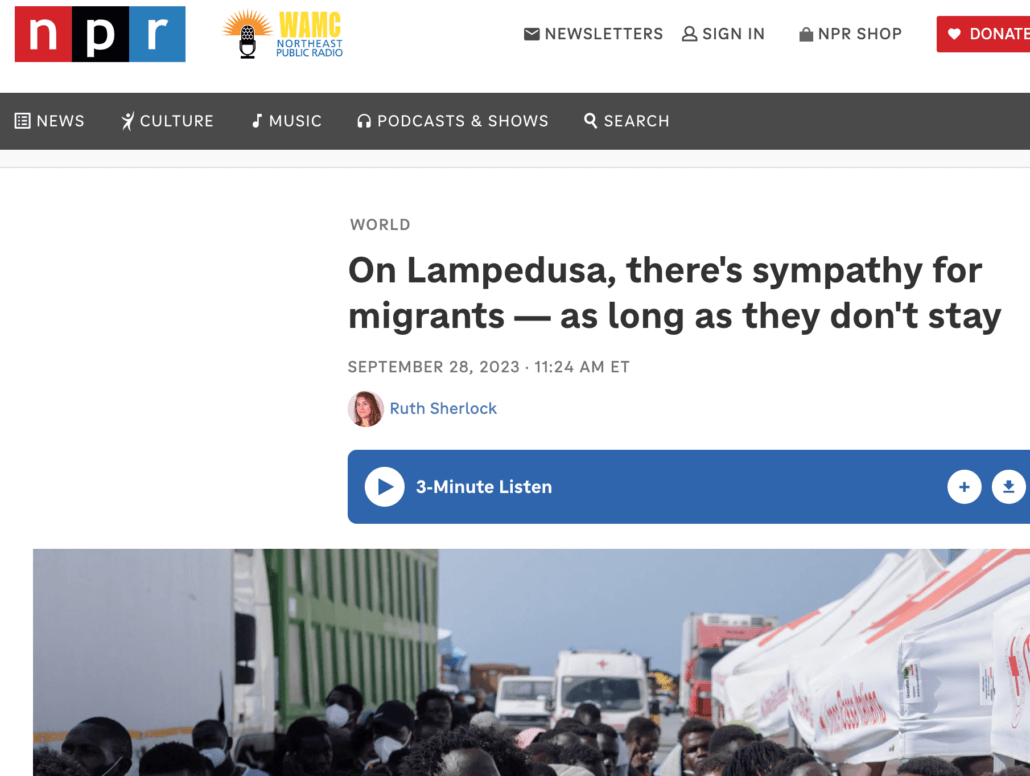
Click above to read or listen (3 minutes) to this story.
Listening to migrants’ stories reveals the common thread of desperation—all flee homes due to violence, threats to life, political or religious persecution, economic hardship, sex trafficking and abuse, climate change or a combination of these. In Italy, I learned that the Mediterranean Sea has become a cemetery for no less than 23,000 of God’s children. A month ago, two Venezuelan families arrived in Kingston. We took one into our home, the other was taken by another UIDN volunteer. They shared their story with us. The couple, and their son JM (not his real name), fled Venezuela for Ecuador seven years ago. In Venezuela, Jesus worked construction and was paid $20 a month. There was no medical intervention available for JM when he was born with a compromised colon.
Later, a botched surgery in Ecuador left him in a coma for 16 days and has lived with a colostomy bag for the last seven years. This past Monday I drove JM and his mom to Albany Medical Center where a kind and compassionate pediatric surgeon provided hope that the situation can be remediated. JM’s six-year-old brother is all sweetness and light. But on their two-month trek to the border, mostly on foot, he often asked his father when they would get to where they were going. He father would always say, “Soon.” In response, the child would always tell his dad that he was lying.
All migrants seek safety and a sustainable life. When they make the treacherous journey to borders, the welcome is uneven, often tainted with racism and xenophobic nationalism. Many nations, including our own, fail to offer a caring and compassionate welcome. Our miserly response is not due to a lack of resources, but a lack of will to do otherwise.
We engage the immigrant from a place of fear rather than the risk that love requires. We choose to give priority to our own needs for security, speak in terms of immigrants being a threat. We create pathways that are more accurately described as obstacle courses. Asylum seekers are admitted but not allowed to work until a court date always scheduled too many months later. Unaccompanied minors find employment in chicken processing plants in violation of child labor laws. We have even descended to committing crimes against humanity, separating children from their parents and even putting children in cages. For those fleeing violence a point of possible entry can itself be a place of violence and exploitation. The US immigration system is severely broken and there is no directed and concerted effort to repair it.
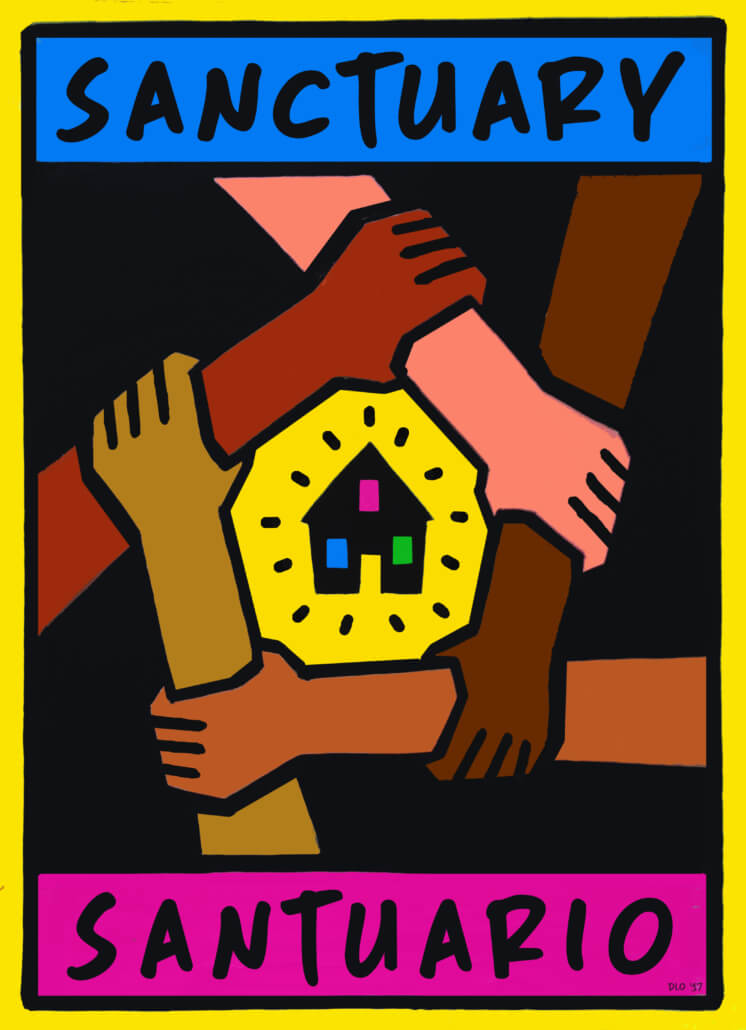
Sanctuary
In 2017, after Kingston became a sanctuary city, the Kingston Interfaith Council sought to operationalize traditional sanctuary in houses of worship. It was necessary to identify homes into which we could move individuals after a short term stay in a house of worship. Eighteen individuals embraced the risk, after being advised of the legal jeopardy of private homes offering sanctuary.
Christians at the table said that this is what it meant to be a disciple of Jesus. Our Jewish friends said that it was their turn to respond as did the Righteous during the holocaust. Those who had no faith connection simply said that their very humanity compelled them to do so. I will always remember that meeting. I experienced it as being in the company of saints.
We can lament this global nightmare or step up to make a difference—bringing light where there is darkness, offering hope where there is despair, compassion where there is indifference, and love where hate appears to have the ascendancy. Supporting refugees anywhere is supporting refugees everywhere. Sustained awareness of the global refugee crisis, coupled with actionable follow-through, is crucial. Participating in a hopeful and expanding global heart, beating with love that spurs action for those in great need, realizes the best in our humanity.
Thinking globally on the plight of refugees demands acting locally. For seven years, the Ulster Immigrant Defense Network (UIDN) and its volunteers have been doing just that. The population we serve is expanding, with 245 families attending our weekly food distribution program last month, as compared to the 85 families last year. In addition to meeting their needs for food, UIDN also provides, clothing, essential household items, rent and utilities assistance, transportation to and from mandated appointments and court dates, legal consultations, legal support, and access to health care.
Beyond meeting basic human needs, UIDN is developing an academy for immigrant women, providing building skills for self-advocacy and empowerment, including developing a migrant-owned cooperative, Blooming Queens of Clean. For me the words of Jesus compel my response. I am sure that for each of us there is a voice within that would serve to compel a passionate response. To be grateful for the gifts we have been given, is to be ever more generous gift givers.