
Paula Allen, a photographer, lecturer, and activist spends a lot of time on our northern and southern borders and will be reporting here from time to time. Paula makes images that shed light on people’s bravery, the magic of activist creativity, and the relentless determination to never give up in the face of injustice.
Three thousand miles apart two women courageously set out to find safety in the United States. One crossed the southern border while the other crossed the northern border.
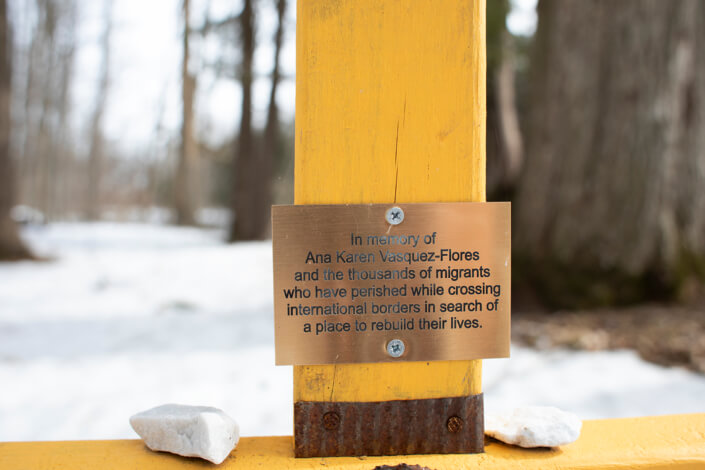
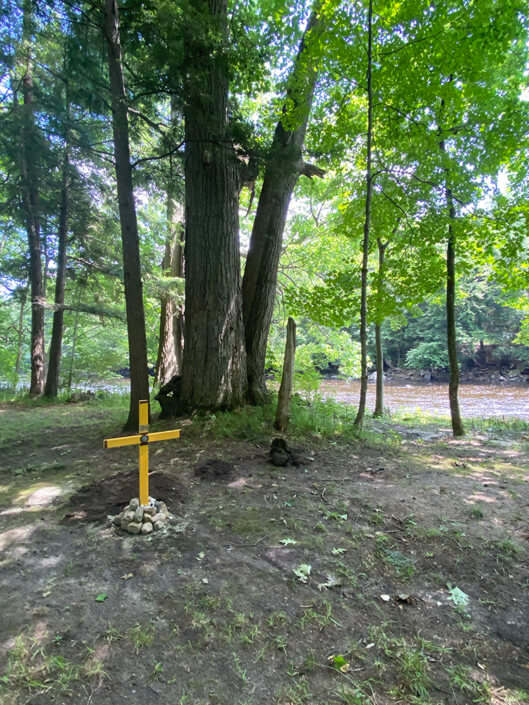
Ana Karen Vasquez-Flores was 33 years old and pregnant. She was reported missing on December 13, 2023. Agents of the Champlain Border Patrol had been told that a woman had tried to enter the U.S. from Canada and might be in need of rescue. Her body was found in the Great Chazy River on the morning of the 14th.
Authorities say a relative of Vasquez-Flores paid a smuggler $2,500 to get her safely across. He brought Vasquez-Flores to the border on a frigid cold night and told her to wade across the river. She likely lost her footing and drowned.
Martha Caracheo Paramo was 40 years old. The cause of her death, as determined by the medical examiner, was a pulmonary thromboemboli. Her body was recovered on January 13, 2025, at the end of the border wall east of Sasabe, AZ.
Her 15-year-old son, yelling for help, alerted social justice volunteers at a near-by makeshift camp that his mother was not breathing. Despite emergency medical efforts she could not be revived.
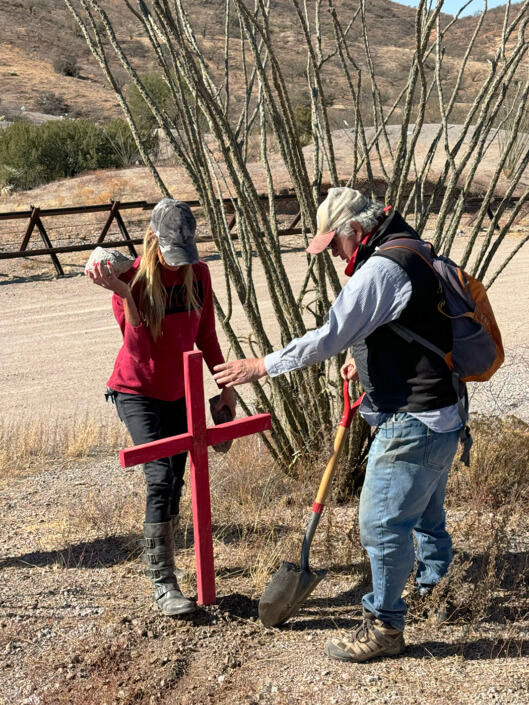
Crosses now mark the locations of their deaths. Alvaro Enciso –artist, immigrant, and Tucson resident — has been planting hand-made crosses throughout the borderlands, the Sonoran Desert, grasslands, canyons, and mountains for over a decade. Last year, he placed his first cross on the northern border for Ana Karen.
Enciso uses items he finds in the desert to decorate his crosses. The paint comes from donors, and each cross features a red dot to match the red dot on GPS maps marking a location of discovered remains. Every Tuesday, along with volunteers, Enciso hikes to multiple locations, placing brightly painted crosses in the earth.
I have been in the desert with Alvaro a number of times and I have walked miles with Di, who tracks locations for Alvaro, and who delivers water along migrant paths.
The desert is a ‘beast,’ Di told me. Rattlesnakes, cholla cactus, blisters that turn into infected wounds, fractures, dehydration, and exhaustion are all catastrophic for the migrants who have been on the move for months.
Alvaro calls his cross planting, “Donde mueren los sueños/ Where dreams come to die.” As a cross is secured in cement, there is a moment of silence, a person remembered, a life imagined, a name spoken out loud.

 Hudson Valley Strong